Showing posts with label christmas. Show all posts

Tuesday, December 27, 2011

God Rest Ye Merry Gentlemen: GENTLEMEN

Sure, the presents have all been opened, the dinners have been eaten, the stockings probably are even now being put away--but I still have one Christmas post left this year.

The word gentleman does not mean today what it did a little over one hundred years ago.  I could write up a nice and neat little etymological diatribe about the how's and why's of the change--but someone already did so in a far more efficient form than I could ever hope to manage.  The following is a portion of Mere Christianity which is itself a collection of materials shared by C.S. Lewis (at the request of Winston Churchill) over British radio during the rampant bombings by German forces on English soil during World War II.

The word gentleman originally meant something recognisable; one who had a coat of arms and some landed property. When you called someone "a gentleman" you were not paying him a compliment, but merely stating a fact. If you said he was not "a gentleman" you were not insulting him, but giving information. There was no contradiction in saying that John was a liar and a gentleman; any more than there now is in saying that James is a fool and an M.A.  But  then  there  came   people   who  said-so  rightly,   charitably, spiritually,  sensitively,  so  anything  but  usefully-"Ah, but  surely the important thing about a gentleman is not the  coat of arms and the land, but the behaviour?  Surely he is the true gentleman who behaves as a gentleman should?  Surely in that sense Edward is far more truly a gentleman than John?"

They meant well. To be honourable and courteous and brave is of course a far better thing than to have a coat of arms.  But it is not the same thing.  Worse still, it is not a thing everyone will agree about. To call a man "a gentleman" in this new, refined sense, becomes, in fact, not a way of giving information about him, but a way of praising him: to deny that he is "a gentleman" becomes simply a way of insulting him. When a word ceases to be a term of description and becomes merely a term of praise, it no longer tells you facts about the object: it only tells you about the speaker’s attitude to that object.  (A “nice” meal only means a meal the speaker likes.)

A gentleman, once it has been spiritualised and refined out of its old coarse, objective sense, means hardly more than a man whom the speaker likes. As a result, gentleman is now a useless word. We had lots of terms of approval  already,  so it was not needed for that use;  on the other hand if anyone  (say, in  a historical work) wants  to  use  it in its old sense, he cannot do so without explanations. It has been spoiled for that purpose.

Now if once we allow people to start spiritualising and refining, or as they might say "deepening,” the sense of the word Christian, it too will speedily become a useless word.  In the first place, Christians themselves will never be able to apply it to anyone. It is not for us to say who, in the deepest sense, is or is not close to the spirit of Christ. We do not see into men's hearts. We cannot judge, and are indeed forbidden to judge.

It would be wicked arrogance for us to say that any man is, or is not, a Christian in this refined sense. And obviously a word which we can never apply is not going to be a very useful word. As for the unbelievers, they will no doubt cheerfully use the word in the refined sense.  It will become in their mouths simply a term of praise. In calling anyone a Christian they will mean that they think him a good man.  But that way of using the word will be no enrichment of the language, for we already have the word good. Meanwhile, the word Christian will have been spoiled for any really useful purpose it might have served.

"God Make You Mighty, Land Owners"

That would be the more accurate title and first line of the song then.  A title which would seem to suggest the importance of stewardship and responsibility over what you have been given, as well as the implication that when you have been granted much, much is required.

Wednesday, December 21, 2011

God Rest Ye Merry Gentlemen: MERRY


A lot of religious music used by the church in the 15th century had been written in Latin.  These songs were generally sung to sad or somber melodies that didn't evoke a lot of enthusiasm or joy.  So, in their own circles peasants wrote songs of their own using more uplifting religious themes and melodies.  Many of these folk songs are what we think of when someone says "Christmas carol."

God Rest Ye Merry Gentleman certainly falls into this category.  In fact, this song was such a lively tune in comparison that it was typically danced to as they sang it; and it was easily the most popular Christmas carol of it's day.  In fact, it's lyrics were actually closer to the Biblical account of Jesus' birth than many of the songs being sung in the church at the time.  Despite it's popularity among peasants, it would not be published until the 19th century during Queen Victoria's reign.  First printed for the Anglican church, it soon became popular all over the world.

Words change over time.  They change a lot.  An entire branch of study called etymology (sort of a mash-up of history and grammar) exists that researches the older and original meanings of words that often fall out of use.  Though not quite as astute in this branch of study as I would like to be, it holds a wealth of information, and understanding, concerning the meaning of antique language and literature.  If you read my previous post you already understand that.

Today when we think of the word Merry we are thinking of a synonym for happy, joyful, or festive.  That is the popular use of the word in this present era.  However, in the Middle Ages the word meant something altogether different--it was a word used to describe armies, soldiers, and rulers!  In Middle Age English it literally meant great, strong, or mighty!

The charge of the song then, when taking into consideration the meaning I previously discussed for rest is God Make You Mighty...  In comparison to the downer songs of their day this song was not only a tune of celebration, but for the Middle Age peasants who wrote, loved, and popularized it... it was a battle cry.  In fact the seasonal salutation "Merry Christ Mass" was thought to be such a powerful and happy notion to the peasants that it actually influenced the change in the meaning of the word to become what we understand today.

Mighty Christmas to all!

Monday, December 19, 2011

God Rest Ye Merry Gentlemen: REST

God Rest Ye Merry Gentlemen...

I've already posted about this song once this Christmas season, but it is my favorite holiday tune.  So, I want to add a little more by kicking off a short series that focuses entirely on the first line, and title, of the tune.

Rest has a few different definitions. Check out the dictionary.com and Hebrew definitions.

One definition that immediately jumped out at me was this one:


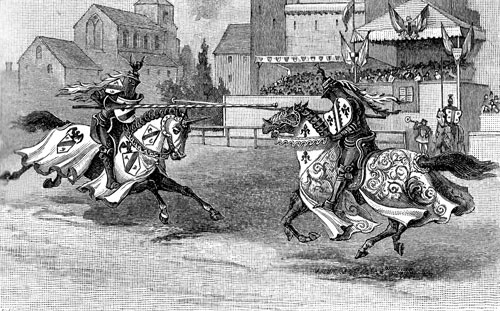
noun:  a support for a lance
Origin:1490–1500; variant of arrest


Now, I'm not saying that this is specifically the definition the unknown author of this darling song was leaning on; but it could be.  Especially given the context and the etymology of the last two words in the line (which is what my next two blogs are about).

Out of all the definitions of rest that I've read this one makes the most sense.  It basically means God rests you in Him.  No, not a nap.  Not a vacation.  God holds you close.  He puts you where you need to be so that you can live up to your proper use.  
A lance would be "rested" between the arm and side as the advancing combatant was preparing to drive his long sharpened stick through an enemy.  Not exactly what we think of when we think of rest.  "Rest" for a lance was the moment of placement before impact.

God rest me indeed.

Sunday, December 4, 2011

X Marks the Spot

Have you ever seen "Merry Xmas" written on anything?  I have.  A lot.  Have you ever heard someone throw a fit about it?  I have.  Quite often.

It usually has something to do with people believing and operating under the assumption that the guilty party is trying to "take Christ out of Christmas".  Franklin Graham, a man I highly respect, has been known to spread this exact message on a number of occasions, even stating that the use of Xmas "is a direct attack on the name of Christ."

We have reached a point in our country that for some people Jesus is a taboo word, but using the term Xmas has nothing to do with that.

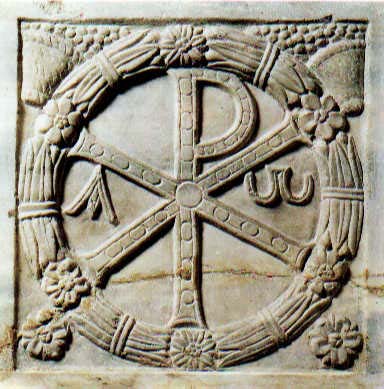
Without boring you with an exhaustive history lesson--the English alphabet is basically directly copied from the Latin and Greek alphabets.  The Greek letter X (Chi) is the first letter in the Greek word Χριστός and was commonly used to represent Christ.  That little pic on the right (the Labarum) that looks like a X and P together was also used.

Xmas has been widely used and commonly accepted as an abbreviation for Christmas for a long, long time.  It has nothing to do with trying to remove Christ from Christmas.  It is just a shorter way to say it.

We really need to stop demonstrating ignorance by feeding the fires of misconception and paranoia this time of year.  For believers this is an incredible season of celebration.  Celebrating Jesus really is the joy of the world.  Anger has no place in it.

Saturday, December 3, 2011

Christmas As It Should Be: Loud and Hectic

The following is a guest blog from my dear wife (Jamie King) on one of her favorite subjects; Christmas.

There is a Christmas song I love (okay there are a hundred Christmas songs I love if I am being honest) called “Not That Far From Bethlehem” The tune is somewhat catchy and the words very predictable so you won’t find it on any Top 100 charts, but it really revolutionized how I approached the holiday season.

Now I love Christmas.  Christmas music, Christmas trees, Lights, Presents, Family Dinners, Traveling To and Fro, Hectic Shopping, Loud Homes, I love it all.  Most people don’t really love Christmas.  They love Christmas things.  They like trees.  Or music.  Or presents.  While these things of Christmas are grand, I am now a firm believer that the crazy holiday traveling, loud family gatherings, and hectic lifestyles are a far better reflection of the true Christmas spirit than the things.

So what was the original Christmas like?  Well we hopefully all read the story of Jesus’ birth during this Christmas season.  It is after all the “Christmas Story.”  But let’s reflect on it here.  A very round Mary and her fiancé/husband Joseph travel from Nazareth (in Galilee) to Bethlehem to take part in the census.  Luke (the historian/doctor i.e. Mr. Accurate) makes sure to note that everyone went to his own town to register.  So everybody is going home for Christmas. Crazy holiday traveling? Check  

Luke goes on to note that Joseph went to Bethlehem (the city of David) because he belongs to the house and line of David.  Now if you are the kind of person who tends to skim read the genealogical portions of scriptures let me explain something to you: David had lots of descendents!  So everyone is in Bethlehem for the census.  We know there was no room for Jesus to be born in the inn (really? No room in any inn in the whole city? Sounds a lot like Christmas at Mom’s where you start to wonder who is going to have to sleep on the dining table or in the doghouse because even a 4 bedroom house starts to feel small when you get enough people there.  Crowded and busy Bethlehem sets the scene for our Savior’s birth.  Hectic? Check.

Now if this doesn’t seem fun enough just yet, the angels appear to the shepherds announcing the birth of the child and the shepherds run off to Bethlehem to find him.  (And you thought your relatives were loud and stinky).  Combining the newborn baby, a city so crowded with descendents of David there is no room in the inn, a group of shepherds, and a company of angels makes me doubt the hymn Silent Night is very applicable.  Loud family gathering? Check.

So?  So maybe this Christmas in the hustle and the bustle we should be thankful for the opportunity to celebrate the real Christmas.  Just as loud and hectic as it was originally.

Follow my endearing darling on Twitter.  Also, you can follow all of our ministry happenings at www.nathanandjamie.com.

Thursday, December 1, 2011

Joseph and I

We're not really sure what day and date that Jesus was born on; but Joseph celebrated the first Christmas much like I will be celebrating this one--as an expectant father.  Lately I've gotten a familiar question from several well-meaning friends; "are you nervous?"  In a word . . . no.  I'm not nervous at all.  I am incredibly excited about the impending birth of my sweet little boy. 

Jamie is now twenty-five weeks pregnant.  She has had a fairly trouble-free experience, and I fully believe these next seventy to eighty days will be equally trouble-free.  I believe our baby will be born whole and healthy, on time, and without difficulty.  I believe that he is a tremendous blessing, and will in fact be one of the greatest blessings of my life.

However, I do have a few questions.  And I can't help, but wonder if my Joseph may have had some similar questions.

What will he look like?
What will he sound like?
Will he be a mama's boy, a daddy's boy, or something in between?
Will he be respectful?
Will he be smart?
Will he be athletic?
Will he be quiet?
Will he be strong?
What will his first word be?
What time of day will he be born?
How much will he weigh?
Will he be a night owl like me?
Will he be a mathematician like his mother?

I'm sure Joseph had his share of questions as he eagerly expected the birth of the Son of God whom he was to raise.  This miracle baby entrusted to this seemingly normal man.  I can't even begin to imagine the weight of it.  We don't read much about Joseph's influence on Jesus after his birth, but one day on the other side of eternity I'd like to sit down with this incredible carpenter.  What questions do you think Joseph may have had?

Tuesday, November 29, 2011

Holidays

Here we go again.  The holiday season.  I love it.  I love absolutely every second of it.  I love being with my family, all of them.  I love all that it entails.  I love the religious observances we attach to this time of year.  This is a very special and sacred time of year for me.
The following is a question posed to me by a dear friend online and my response.  Enjoy.
"I'm already sick and hurt of the politically correct "holiday cheer". Seriously people, if you're not into Christ, the Saviour of the world (you) then why celebrate "Christ"mas??? --(just an after thought)-- I wanted to add to afore statement by saying, "you don't see Christians taking over other religions holidays and degrading their meaning." But then an ironic thought hit me,.... Halloween was the Druid Festival of the Dead. Unfortunately, I know alot of Christians who play along w/that satanic religious rite by diluting it and making it "ok", just like other religions do when observing CHRISTmas. hummm.....i think i may have a thought for you to follow through... i wonder how many false religion holidays christians observe vice versa...."  *edited for readability, not content
You might not like my answer, but here goes.  Please, anyone who reads this, understand that I'm talking about the observance of holidays in a historical sense, and not strictly from what I believe or practice myself.  I just felt that this approach best answers the question.  Holidays are tricky when it comes to study and trying to define the narrow lines of what is a Christian or secular observance is not as easy as most of us would like to think.  The big two for Christianity would definitely be Christmas and Easter; but even those are congruent with ancient pagan rites. People get in a big huff about recognizing Christ at Christmas, and for those of us who are believers, it is a season for exactly that; but the historical facts are plain.  Holidays happen across all cultures, each one has their own tradition, belief, history, and values they associate with those days. Concerning Christmas, we don't know the actual date that Jesus was born--through careful study we arrive at a time somewhere between late September and the beginning of November.  I just don't have time to recount all the historical data to back this up; but the gist is that early Christians (most likely 2nd to 3rd century A.D.) took the pagan holidays they observed prior to their conversion and shoe-horned their new found Christian faith onto those holiday.

As a believer, missionary, and family man I observe all of our traditional American holidays with the people I love.  I do it according what I believe, and what those holidays mean to me.  The truth is that there are few, if any, traditional holidays which don't have some kind of origins not associated with Christianity.  Does that mean we should stop observing them?  No! It means we should practice healthy communication about what these holidays mean to us and why we observe them.  A healthy understanding of the history associated with them would go a long way too in educating future generations.

We (the Church) are the worst about sending mixed signals at the holidays.  We don't want anyone to hijack Christmas and so we get in a huff when we hear "happy holidays."  Yet, we bring in all this superstition about a mythical fat man traveling around the world delivering toys.  We want to make sure that Easter is reserved for acknowledging the resurrection of Christ; but we buy our kids baskets, hide eggs, and talk about Easter Bunnies.  Most of this is done innocently enough, and I'm not writing this out of contempt, condemnation, or carelessness.  However, we need to appropriate a better understanding of our holidays.

Why would people who don't recognize the lordship of Christ in the most essential parts of their lives acknowledge or celebrate His birth or resurrection?  We don't own dates on a calendar and even if we tried to; we wouldn't really know which dates to own.  Perhaps, the Church instead should cease to regulate observance of such monumental events to such a specific window of time. Instead we should teach and disciple people to acknowledge these holy moments through a regular practice of a life displaying the fruit of one who celebrates the birth, death, and resurrection of the Incarnate One.  I wonder, is God more pleased with our militant defense of the calendar--or with our passionate pursuit of Him?

Merry Christmas.